

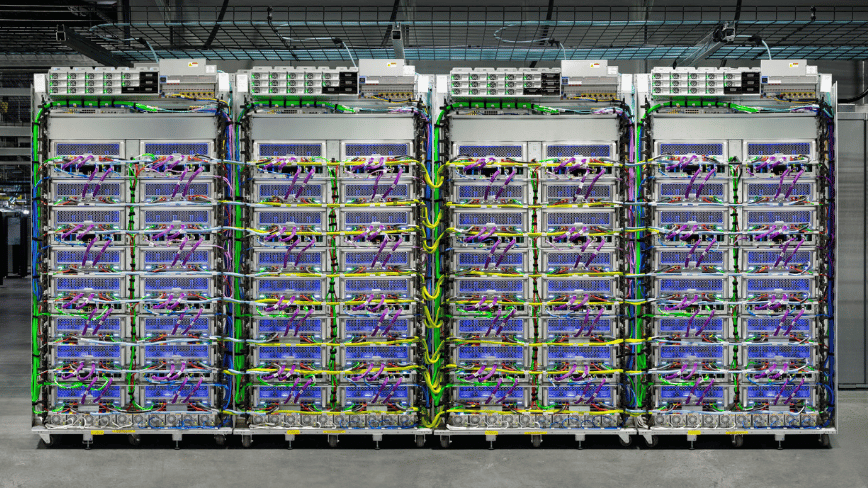
In short: Anthropic has secured a groundbreaking agreement to access approximately 3.5 gigawatts of next-generation Google TPU compute capacity through Broadcom starting in 2027. This marks Anthropic's largest infrastructure commitment to date, coinciding with a revenue run rate that has soared to over $30 billion, significantly up from approximately $9 billion at the end of 2025.
On April 6, 2026, Anthropic announced its substantial new compute capacity agreement with Google and Broadcom. This deal provides Anthropic with access to around 3.5 gigawatts of Google tensor processing unit (TPU) capacity via Broadcom, building upon the existing 1 gigawatt supplied in 2026. The agreement underscores the rapid growth of the AI lab, which now requires such expansive infrastructure.
Krishna Rao, Anthropic’s Chief Financial Officer, emphasized the significance of the deal, stating it represents “our most significant compute commitment to date.” He noted that this agreement is part of the company's “disciplined approach to scaling infrastructure.” Most of the new capacity will be situated in the United States, furthering Anthropic’s commitment made in November 2025 to invest $50 billion in American AI computing infrastructure.
Three Parties, One Infrastructure Layer
This announcement highlights the role of Broadcom, which acts as the intermediary between Google’s custom silicon and Anthropic’s workloads. Simultaneously, Broadcom has entered a separate long-term agreement with Google to design and supply future generations of custom TPU chips and to ensure the provision of networking components for Google’s next-generation AI data racks until 2031.
Broadcom is becoming an essential player in the AI infrastructure landscape. Under the leadership of CEO Hock Tan, the company is focused on building the silicon and interconnections necessary for AI models, rather than developing AI models itself. Following the announcement, Broadcom shares rose approximately 3% in after-hours trading, reflecting strong investor interest in companies that operate at the physical layer of the AI stack. Analysts from Mizuho estimate that Broadcom could generate $21 billion in AI revenue from Anthropic in 2026, climbing to $42 billion in 2027.
Broadcom's relationship with Anthropic was first hinted at in September 2025 when a massive order for custom TPU racks was disclosed. By December 2025, it was confirmed that Anthropic was the mystery customer behind a $10 billion order, supplemented by an additional $11 billion order. The recent announcement marks a significant evolution in this partnership, which has progressed from a $21 billion commitment to multi-gigawatt infrastructure.
Revenue and Customers: The Numbers Driving Infrastructure
The compute deal is contextualized by Anthropic's impressive commercial growth, with the company reporting a revenue run rate that has now surpassed $30 billion, a significant increase from around $9 billion at the end of 2025. This rapid growth is largely attributed to an accelerated enterprise sales strategy following the closure of its Series G funding round on February 12, 2026, which raised $30 billion at a $380 billion post-money valuation.
At the time of the Series G funding, Anthropic had over 500 business customers, each spending more than $1 million annually. This figure has since doubled to over 1,000 customers, demonstrating a quickening pace of enterprise adoption that necessitates increased compute capacity.
Claude’s Multi-Cloud Architecture
Distinctively, Anthropic’s infrastructure approach employs a multi-vendor strategy for chip usage. Its model, Claude, is trained and operated across three hardware platforms: Amazon’s Trainium chips, Google’s TPUs, and Nvidia GPUs. Anthropic claims that Claude is the only frontier model available on all three primary cloud platforms—AWS, Google Cloud, and Microsoft Azure—illustrating both commercial and technical advantages.
This multi-vendor strategy not only provides Anthropic with resilience but also enhances its negotiating power. If one platform faces capacity constraints, workloads can be adjusted accordingly. This strategy mirrors Microsoft's approach to hedge against single-vendor dependencies.
The US Infrastructure Commitment
Anthropic's April agreement is explicitly linked to its previous commitment to invest $50 billion in American AI computing infrastructure, initiated in partnership with Fluidstack. This investment is expected to develop several data center sites in Texas and New York, coming online through 2026. The new Broadcom agreement extends Anthropic’s infrastructure footprint into 2027 and beyond.
The emphasis on domestic infrastructure aligns with strategic priorities outlined in the Trump administration’s AI Action Plan, underscoring the importance of US-based compute capacity. Anthropic’s infrastructure investments reflect this priority, with a substantial share of next-generation AI training capacity being established within the US.
The Compute Arms Race
The collaboration between Anthropic, Google, and Broadcom is indicative of a broader trend in the AI sector, where rapid growth has led to compute needs that outpace revenue generation. This has necessitated financial innovations akin to those used in infrastructure utilities. Similar dynamics were observed in SoftBank’s $40 billion bridge loan for OpenAI, and Meta’s $27 billion infrastructure deal with Nebius.
As the AI landscape evolves, companies like Anthropic are making strategic decisions about how to manage their relationships with the services built on their models. Recently, Anthropic restricted access to Claude through certain third-party frameworks, highlighting the cost dynamics of frontier model inference and the difficult choices AI labs must make regarding subsidized and explicitly priced use cases.
For Broadcom, this trajectory marks a significant shift; the company has transformed from being overlooked in AI discussions to becoming a critical component in the infrastructure that supports two of the most influential AI models: Google’s Gemini and Anthropic’s Claude. This strategic positioning, secured through 2031 for Google’s custom silicon and through the new agreement for Anthropic’s TPU access, represents a pivotal moment in semiconductor industry evolution.
Source: TNW | Anthropic News