

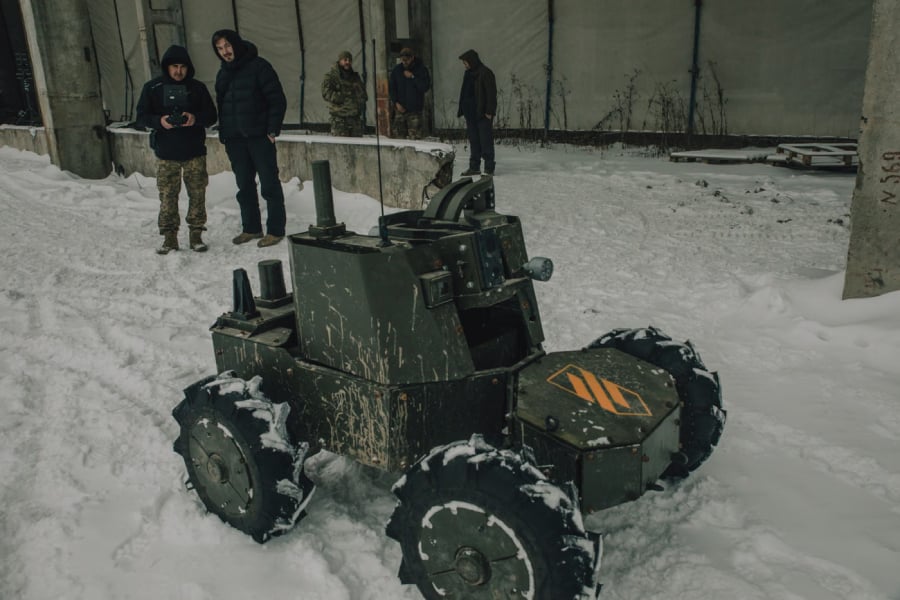
As the conflict with Russia stretches into its fifth year, Ukraine has turned to innovative robotic technologies to tackle missions that are too perilous for human soldiers. These war robots, introduced in 2024, are becoming integral to Ukraine’s military strategy, allowing the country to maintain a tactical advantage while minimizing troop casualties.
Robots are now employed for a variety of tasks, including supply deliveries, reconnaissance, and even direct combat against enemy forces. This strategic shift indicates a future where warfare may rely more on automated systems than on traditional human troops.
Creativity at the Heart of War
Throughout history, periods of conflict have driven technological advancements, and the ongoing war in Ukraine is no exception. The need for efficient military solutions has spurred the development of sophisticated technologies that are changing the landscape of modern warfare. Initially, Ukraine faced significant challenges due to Russia's vast military resources, but the conflict has evolved into a contest for technological supremacy.
Ukrainian drones have gained international recognition for their precision and effectiveness, attracting attention from various countries, particularly in the Gulf region. These drones have demonstrated the capability to intercept and neutralize long-range kamikaze drones, which are often deployed by adversaries.
A Mix of War Machines
The Ukrainian military employs various robotic systems, each designed for specific roles. Some robots are used for logistical support, while others are fitted with advanced munitions to carry out precise strikes. Unmanned Ground Vehicles (UGVs) have become crucial, handling around 90% of logistics operations in the Ukrainian army. Reports indicate that in January alone, Ukrainian forces conducted about 7,000 UGV missions.
Lieutenant Victor Pavlov from the Ukrainian 3rd army corps explained the rationale behind utilizing UGVs: "It’s very difficult to move around because of enemy first-person-view drones. So we use robotic systems to navigate these challenges.”
One notable success is the DevDroid TW 12.7, which defended a position for 45 days, while another robot managed to travel 20 kilometers to a Russian military site, detonating 200 kg of explosives to destroy the target. These machines can continue functioning even under fire, which allows them to execute high-risk rescue missions and perform essential tasks like laying barbed wire and mine placement.
The Advantage of Size and Cost
Pavlov noted that around 25% of the robotic units are lost to Russian forces, but this loss is considered acceptable given the significant operational savings they provide. The affordability of materials used to construct these robotic systems allows Ukraine to produce them in greater quantities, enhancing their military effectiveness. Their smaller size also presents an advantage, making them less detectable by enemy drones and extending their operational duration beyond that of a typical soldier.
Limitations of Lethal Machines
Despite their effectiveness, these machines do have limitations, many of which arise from ethical considerations. A deputy commander emphasized to a news outlet that while many UGVs possess autonomous capabilities, the final decision to engage targets remains with human operators. This is crucial to prevent potential misidentification and civilian casualties, highlighting the importance of human oversight in robotic warfare.
A New Kind of War
Russia continues to adapt its military strategies as well, developing its own robotic systems such as the Courier, which is designed for electronic warfare and can carry substantial loads. Additionally, the Kuryer UGV is being fitted with weaponry like flamethrowers and machine guns, reflecting a shift towards automation in their military operations. The evolution of warfare through robotics indicates a broader trend where future conflicts may increasingly rely on automated systems.
As nations like Ukraine integrate ethical considerations into their military strategies, the rapid advancement of unmanned technologies raises significant concerns about the potential for misuse. The international community faces a pressing need to establish regulations to govern the deployment of such systems to ensure that ethical standards are maintained in warfare.
Also read: Innovations in robotics are not confined to battlefields; they are also making strides in civilian sectors, showcasing the multifaceted applications of these technologies.
Source: eWEEK News